Decide fleet scope and model mix
Choose between a repeatable single model and a mixed layout range by comparing pitched size, packed weight and the setup or takedown effort your site team can sustain.
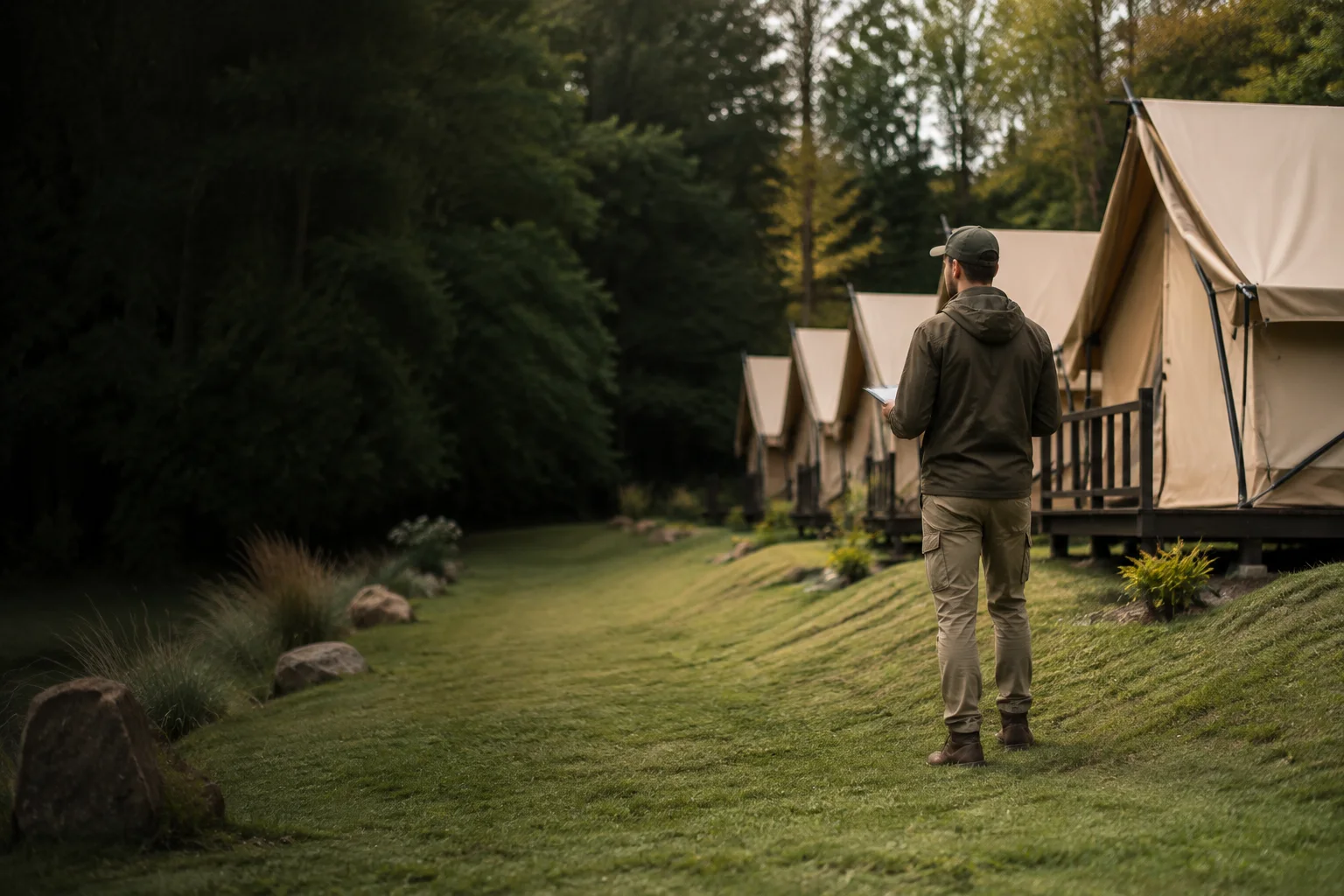
Sourcing guidance for campsite operators, glamping projects, tent rental programs and hospitality buyers. Tents here are movable outdoor units for seasonal site programs — plan anchoring, cleaning and staffing around your operation rather than treating them as permanent structures.
Choose between a repeatable single model and a mixed layout range by comparing pitched size, packed weight and the setup or takedown effort your site team can sustain.
Estimate crew and time per unit from each model's pitching steps, then plan pegging, guy lines and any canopy or partition handling for your ground conditions.
Build a turnaround routine for cleaning by fabric, full drying and air-released storage so units are ready for the next booking without staying damp.
List valves, columns, poles, repair materials and carry bags per model, and agree spare quantities and replacement planning with the supplier before the season.
Compare layouts and fabrics on the glamping and campsite tents page, or review larger floors and multi-zone configurations in large group camping tents. For family-style rental pitches, also browse family camping tents.
Double-door family configurations with several fabric options for rental pitches and campsite layouts.
Review a family model →A 13.68 m² model with a double-door layout, TPU window and utility details for campsite programs.
Review the campsite model →A polycotton sourcing family covering modular, bedroom-and-living and canopy layouts for managed sites.
Review the polycotton family →Use the family tent selection guide to frame your site requirements, then review OEM options and the quality process. Include the intended unit count, site layout, use period and compliance needs in your RFQ. Return to the solutions overview for other buying roles.
Start with the glamping and campsite tents and large group camping tents ranges, then match layout, fabric and listed capacity to the units and sites you operate.
Decide whether one repeatable model simplifies setup, cleaning and spares, or whether different layouts serve different sites better. Compare pitched size, packed weight and workflow per model.
Inflation time is listed per model and is not full setup time. Positioning, pegging, guy lines and any canopy or extension add work, so estimate crew and site time from the product page.
Clean by the fabric specification, dry every part fully and store with air released according to the model manual. Plan a storage area that keeps folded fabric off damp ground.
Confirm valves, air-column components, poles, repair materials, carry bags and model-specific spare availability with the supplier for the exact units you order.
Share unit numbers and model mix, site layout and use period, interior and decor requirements, branding, packaging, spares and destination-market compliance needs.